Aniwatch - Watch Free Anime Online Subbed and Dubbed
Welcome to Aniwatch, a simple and convenient place to explore and read manga online. Discover popular series, find new titles, and enjoy an easy manga reader experience with clean navigation. Whether you are catching up on a favorite story or looking for something new, Aniwatch makes manga discovery simple and enjoyable.
Stories worth reading, characters worth remembering, and adventures waiting around every page.
What is Aniwatch?
Aniwatch was one of the largest free, unlicenced anime streaming websites on the internet, built explicitly to allow global fans to watch massive media catalogs without monthly subscription fees. The platform grew to global prominence by inheriting the complete user database, layout design, and backend infrastructure of Zoro.to after that brand surrendered to international copyright associations. However, because the website served copyrighted content without valid distribution permits, the original aniwatch.to domain was permanently dismantled following coordinate international civil enforcement actions.
For the international community of anime fans, this portal did not just represent a place to find free video streams. It acted as an expansive digital town square where millions of users kept detailed diaries of their watch counts, configured custom user badges, and interacted across vibrant comment feeds. But the structural reality of underground streaming platforms means that consistency is impossible.
Understanding the operational background of this hub, the mechanics of its current copycat systems, and how to fix media playback errors is vital to keeping your hardware safe.
Yes, the original Aniwatch is dead after a series of high-profile corporate rebrands, massive international law enforcement stings, and an unprecedented wave of global anti-piracy
If you want to keep your browser safe from dangerous pop-up windows while fixing your captions, read our comprehensive guide to configuring secure ad-blockers for
| Project / Address String | Operational Purpose     | Public Server Status Summary    |
+--------------------------+-------------------------+---------------------------------+

| Zoro.to                  | Automated Media Scraper | Terminated (Data Moved)         |
| aniwatch.to              | Primary Streaming Hub   | Seized / Offline Permanently    |
| hianime.to               | Subsequent Rebrand Core | Fragmented by Legal Notices     |
| Aniwatch TV Mobile App   | Database Management Log | Active on Official App Stores   |
| Crunchyroll / HIDIVE     | Licenced Broadcaster    | Fully Operational Globally      |
| Tubi / Pluto TV          | Free Ad-Supported TV    | Fully Operational / 100% Legal  |
+--------------------------+-------------------------+---------------------------------+
What is Aniwatch? The Definitive History of the Anime Hub
Tracking the Digital Heritage: From Zoro.to to Aniwatch
To fully comprehend how this site achieved such massive status, you have to look closely at the historical trajectory of anime hosting networks. The website did not build its user base organically over years of slow marketing. Instead, it was born out of a major corporate structural shift inside the streaming underground. Around 2023, a platform known as Zoro.to commanded the largest slice of the unlicenced streaming market, outpacing old industry names like KissAnime.
When international rights groups finalized a series of major legal inquiries against Zoro’s hosting networks, the operators pulled off a stunning technical migration. Over the course of a single weekend, they redirected their entire traffic pool to a brand-new name: Aniwatch. Millions of individual user accounts, completed watch lists, active forum threads, and custom friend circles were moved intact to the new domain.
The site retained the iconic, user-friendly interface that fans loved. It featured distinct color blocking, clear categorization, and minimal initial visual clutter compared to older, sketchy streaming hubs. This smooth transition kept the community fully intact, cementing the new brand as the undisputed king of free anime streaming almost instantly.
How the Backend Scraping Infrastructure Operated
Here is something that most casual internet users completely misunderstand about these portals. The site operators did not maintain massive, multi-million dollar data centers filled with physical hard drives containing every episode of Dragon Ball or Naruto. Operating that kind of storage array is incredibly expensive and leaves a clear financial trail for investigators to follow.
Instead, the engineers developed sophisticated automated web scraping programs. The core website acted merely as a slick presentation layer—a beautiful, organized index. When you clicked the play button on an episode of Chainsaw Man, the site’s hidden backend scripts instantly queried remote cloud storage lockers.
These storage services, run by third-party companies with names like StreamSB, VidCloud, or MegaUp, hosted the actual video files. The player inside your browser simply caught that remote video feed and rendered it on your monitor screen. This clever setup protected the site’s main servers from bearing heavy bandwidth loads, keeping their overhead costs incredibly low.
[User Browser] ---> [Aniwatch Portal Interface] ---> [Backend Scraping Scripts]

                          |                                   |
                          v                                   v
[Decrypted Video Stream] <--- [Third-Party Cloud Storage] <--- [Queries Active Links]
The Global Enforcement Shockwave and the Domain Shutdown
Why the Original aniwatch.to Domain Blew Up
The immense popularity of the site ultimately caused its downfall. By mid-2024, digital analytics reports indicated that the main site was attracting over 100 million visitors every single month. This volume of traffic made it a prime target for the world’s most powerful entertainment groups. The Alliance for Creativity and Entertainment (ACE), alongside the Motion Picture Association (MPA), launched a multi-country legal offensive.
This wasn’t just a basic request to block a website. The coalition worked alongside global registry systems and targeted the specific hosting networks handling the site’s data traffic. This direct pressure forced domain registrars to nullify the platform’s top-level domain settings, effectively erasing the site from the global address books of the internet.
Now, when you try to visit that old web address, your browser will show an error message like “Server IP Address Could Not Be Found.” The developers realized the legal net was closing tightly around them. Instead of trying to patch a sinking ship, they abandoned the domain completely, marking the end of that specific era of streaming history.
The Hidden Threats of Surviving Mirror Clone Formats
When a massive digital hub vanishes, it leaves behind an enormous vacuum. Millions of users still type that old name into search engines every single day, creating a highly profitable opportunity for bad actors. Cybercriminals quickly register expired or slightly altered domain names like aniwatch.biz, aniwatch.cx, or aniwatch.tv.zone.
These fake mirror clones are created using automated web software that copies the visual design of the original platform. They look identical to the layout you remember, featuring the same search bars, menus, and comment sections. However, these sites are not run by anime fans. They are commercial data traps designed to generate fast cash or steal valuable user data.
* Phase 1: The user enters their old login details on a fake mirror site.
* Phase 2: Malicious scripts log the username and password combo.
* Phase 3: Automated bots try that same login on major platforms like Google, Discord, and PayPal.
* Phase 4: The fake site injects unwanted pop-under tracking scripts into the user's browser.
If a site using this name forces you to input credit card information for “age verification” or asks you to install a custom browser plugin, close that window immediately. The real, original service never requested financial details from its audience.
How to Get Captions on Aniwatch and Repair Subtitle Scripts
How to Get Captions on Aniwatch and Repair Subtitle Scripts
Step-by-Step Subtitle Troubleshooting for Web Players
One of the most annoying bugs on surviving proxy mirrors happens when an episode loads perfectly, but the characters speak without any translated text on screen. This issue rarely means the video file itself is broken. Instead, it indicates a failure in the subtitle rendering engine inside your web browser.
The video frames and the caption files travel along two entirely separate data streams. When a remote server gets overwhelmed with high traffic, it prioritizes serving the heavy video data while dropping the lightweight text track entirely.
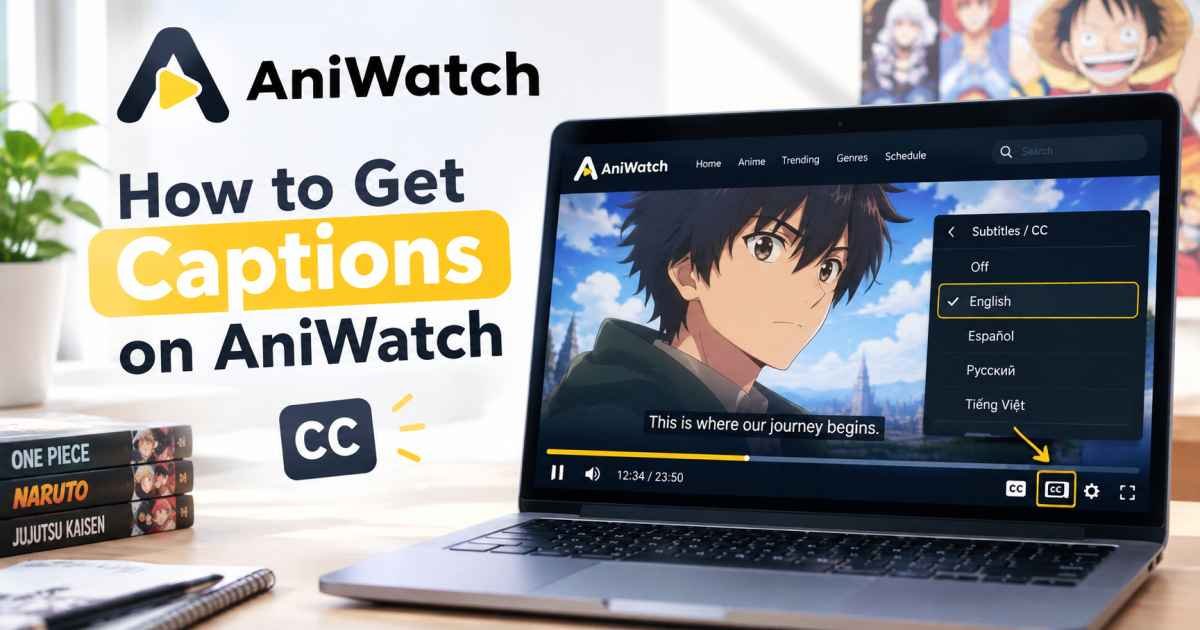
If you are trying to figure out how to get captions on aniwatch proxy platforms, follow this clear, reliable troubleshooting process:
Move your mouse cursor or tap your screen to bring up the video player’s primary controls overlay.
Locate the small Gear Icon sitting in the lower right-hand corner of the video window and click it.
Scroll through the pop-up options menu and click on the section labeled Subtitles/CC.
Check the status; if it is set to “Off,” manually click on English or your preferred translation track.
If the subtitles still refuse to appear on the video matrix, look directly underneath the main player container.
You will see a row of buttons listing different hosting servers, such as VidCloud, MegaUp, or StreamSB.
Click a different server option to force the browser to request a fresh copy of both the video and the caption tracks.
+-----------------------------------+-----------------------------------+

| Troubleshooting Step              | Expected Technical Result         |
+-----------------------------------+-----------------------------------+

| 1. Click Gear Icon                | Opens internal player framework   |
| 2. Toggle Subtitles/CC to English | Activates the WebVTT track overlay|
| 3. Switch Hosting Server          | Forces a fresh data request       |
| 4. Wipe Browser Site Data         | Clears out old, corrupted scripts |
+-----------------------------------+-----------------------------------+
Clearing Cache Trashes and Content Blocker Filters
Sometimes, your own web browser’s security settings can block subtitles. Highly restrictive ad-blockers use automated blocklists that can mistake subtitle delivery networks for annoying pop-up advertisements, stopping them from loading.
If you run a popular extension like uBlock Origin or AdGuard, click on the extension icon while on the video page. open up the advanced logger console and watch the real-time web traffic. Look for blocked lines ending in .vtt or .srt extensions—these are the standard file formats for digital captions.
Creating a custom rule to allow these specific files will fix the issue. Additionally, clearing your browser’s cache for that specific tab forces the player to fetch the latest subtitle files instead of loading old, broken data.
Fixing Closed Captions on Smart TVs and Casting Networks
Casting anime from a mobile phone to a smart television or a streaming device like a Chromecast often causes subtitles to break. This happens because the casting protocol stream sends only the raw video link to your television, leaving the subtitle overlay script behind on your phone.
To fix this issue when casting from a proxy site, avoid using your phone’s native screen-mirroring feature. Instead, open the stream inside a dedicated casting browser app like Web Video Caster. These apps are specifically designed to bundle the external caption file together with the video stream, forcing your television to display the subtitles correctly.
Navigating the Aniwatch TV Mobile App Ecosystem
Official App Store Metadata Trackers Explained
Searching for aniwatch tv on the Apple App Store or Google Play Store will bring up multiple apps using the classic orange logo. Many users download these apps assuming they can stream full shows directly on their phones. They end up disappointed when they realize they can’t play any video files.
It is important to understand that official application stores have strict safety guidelines that ban unlicenced streaming apps. The legitimate apps available on these storefronts are actually metadata trackers.
* Watchlist Management: Syncs directly with public databases like MyAnimeList to track your episode progress.
* Discovery Engine: Offers plot summaries, release calendars, and cast lists for upcoming shows.
* Trailer Previews: Streams official promotional videos hosted on YouTube.
* Global Discussion: Includes community boards where users can comment on and review anime titles.
These utilities are completely safe to use because they do not host or link to copyrighted streams. They serve as handy digital journals for organizing your watchlist, but they cannot replace a true streaming platform.
The Critical Security Risks of Unofficial Mobile APK Files
Because official stores do not allow unlicenced streaming apps, many mobile users look for modified third-party Android Application Packages (APK files) on online forums. These files promise ad-free, direct streaming on mobile devices, tablets, or firesticks.
Downloading and installing these files is a major security risk. Unlike official apps, these independent files do not pass through strict security checks. Malicious developers often take standard tracker apps and modify the code to embed dangerous background scripts.
* Background Crypto-Miners: Uses your phone's processor to mine cryptocurrency, draining your battery and causing overheating.
* Credential Harvesters: Monitors your keyboard inputs to steal passwords for banking or email accounts.
* Session Cookie Hijackers: Steals your logged-in browser sessions to hijack your social media profiles.
* Adware Botnets: Runs hidden, invisible ad loops in the background to generate cash for hackers while slowing down your device.
If an app requires you to turn on “Install from Unknown Sources” on your device, it is best to avoid it unless you are completely certain of the developer’s reputation. Protecting your personal data is far more important than risking your device for an unverified mobile application stream.
Deep-Dive Safety Playbook for Media Streaming Portals
Essential Web Browser Hardening Measures
If you choose to use alternative streaming sites, protecting your computer is absolutely essential. These sites face high server and bandwidth bills, and they often partner with shady advertising networks to cover those costs.
To protect your system from digital threats, you need to set up a secure browsing environment:
Install an Open-Source Ad-Blocker: Use a trusted tool like uBlock Origin. Avoid generic ad-blockers that accept payments from advertisers to bypass their filters.
Deactivate JavaScript Globally by Default: Use browser extensions like NoScript to prevent unauthorized background scripts from running unless you manually allow them.
Block Third-Party Cookies Natively: Configure your browser’s privacy panel to block all cross-site tracking cookies automatically.
Use a Privacy-Focused Browser: Switch to dedicated browsers like Brave or LibreWolf, which include built-in protections against tracking and fingerprinting scripts.
Spotting Social Engineering Traps on Free Media Sites
Modern malware rarely sneaks onto your computer through technical exploits alone. Instead, bad actors rely on tricking you into downloading files yourself through clever social engineering tricks.
The most common trap is a large, fake “Play” button designed to look like part of the video player interface. Clicking it opens an unwanted pop-under window or triggers a prompt to download a file. A real streaming video will always play directly inside your web browser window. It will never require you to download an external file, install a new “codec pack,” or update your media player software. If a site tells you that your browser is outdated and tries to download an executable file like a .exe or .msi file, close that tab immediately.
[Fake Video Container] ---> Click Fake Play Button ---> Triggers Fake Update Prompt (.exe) ---> Malware Installed
[True Video Container] ---> Click Real Play Button ---> Requests Stream Asset (.mpv) ---> Safe Native Playback
The Best Verified Legal Alternatives to Stream Anime Right Now
Top-Tier Subscription Services with Exclusive Libraries
The constant cat-and-mouse game of dead domains and broken subtitles can quickly become exhausting. Moving your watchlist to official, licensed platforms is the best way to enjoy a smooth, reliable viewing experience. These services run on high-end content delivery networks, meaning your video will never freeze up during peak release hours.
The biggest platform in the anime world is Crunchyroll, which holds the largest collection of licensed anime on earth. A premium subscription gives you immediate access to new episodes just one hour after they air in Japan. If you enjoy niche titles, hidden gems, or classic series, checking out HIDIVE is another excellent choice that frequently lands exclusive seasonal projects.
+--------------------+------------------------+----------------------------------------+

| Alternative Name   | Price Structure Base   | Unique Content Strengths               |
+--------------------+------------------------+----------------------------------------+

| Crunchyroll        | Premium Tier Plan      | Massive library with rapid simulcasts  |
| HIDIVE             | Premium Tier Plan      | Deep-cut classic titles and exclusives |
| Tubi TV            | 100% Free / Ad-Based   | Vintage gems and massive retro catalog |
| Pluto TV           | 100% Free / Ad-Based   | 24/7 live themed broadcasting channels |
+--------------------+------------------------+----------------------------------------+
Completely Free Ad-Supported Legal Television Hubs
You do not need a paid subscription to stream anime safely and legally. Several major entertainment platforms have invested heavily in building excellent animation libraries that are entirely free to watch.
The best free option is Tubi TV, which features an impressive lineup of classic series like Yu-Gi-Oh!, Hunter x Hunter, and Cowboy Bebop. Another great choice is Pluto TV, which runs dedicated, 24/7 streaming anime channels alongside an extensive on-demand library. You will have to watch occasional commercial breaks, but your computer stays entirely safe from malicious pop-ups and tracking scripts.
Migrating Your Anime Database and Watchlist Safely
If you spent months curating a massive list of completed shows on an unofficial site, losing that data can be incredibly frustrating. Fortunately, you do not have to rebuild your entire watch history by hand from memory. Most platform rebrands and large tracking tools include built-in import tools to help you save your data.
Go to your user profile dashboard and look for an option labeled “Export Watchlist” or “Download XML Data.” This will download a clean text file containing your entire history. You can then upload this file directly into independent tracking platforms like MyAnimeList or AniList. This ensures your tracking history remains safely backed up under your control, no matter what happens to individual streaming sites in the future.
Frequently Asked Questions
Why did Aniwatch choose to change its name to HiAnime?
The site operators changed the brand name to escape domain blacklists and stay ahead of global copyright enforcement actions. Moving the user data to a fresh domain allowed them to keep the website running without losing user lists.
Are the various Aniwatch apps on the Google Play Store safe to use?
Yes, the versions available inside the official Google Play Store are completely safe because they function strictly as watchlist trackers and database guides. They do not host or stream copyright-protected video files, which keeps them fully compliant with store safety rules.
Can I watch full anime episodes using the Aniwatch TV app on my iPhone?
No, the apps on the official Apple App Store are strictly tracking utilities and database guides. They are designed to help you organize your watch history using MyAnimeList data, not to stream full video content.
Is the original Aniwatch platform currently down or permanently dead?
The original aniwatch.to domain is permanently dead after being dismantled by international copyright enforcement task forces. If you see a website using the Aniwatch name today, you are looking at an unverified third-party mirror clone, as the original development team has completely abandoned the project.
How do I get captions on Aniwatch proxy mirrors when they disappear?
To learn how to get captions on aniwatch replica sites, click the video player’s gear icon, open the “Subtitles/CC” menu, and manually choose the English track. If the text is still missing, look below the container and toggle your streaming server source from VidCloud to an alternate host like MegaUp.
Why does the video player on my chosen Aniwatch portal keep buffering?
Buffering on an Aniwatch proxy site happens when a remote video server gets overcrowded with traffic during popular weekend release windows. You can easily fix this lag by opening the player settings wheel, dropping the video resolution from 1080p to 720p, and switching to an alternate server link.
Is it safe to type my old login credentials into modern Aniwatch mirror sites?
No, it is highly dangerous to input your old account details into current aniwatch.to copycats. Because the original database has been shut down, these unverified replica portals are often designed to steal your passwords and target your connected email accounts.
Are the independent Aniwatch TV APK files safe to install on a Firestick?
No, installing unofficial aniwatch tv Android application packages (APK files) from random online forums carries immense security risks. These independent files are not scanned by official app stores and frequently embed hidden malicious scripts that use your device to mine cryptocurrency in the background.
Conclusion
The most critical takeaway is that the original Aniwatch and HiAnime network has permanently shut down due to global anti-piracy operations. To protect your personal data and keep your devices running smoothly, avoid typing your login credentials into modern copycat domains, and move your watchlists over to secure, legal platforms like Tubi or Crunchyroll.
Get Started with Baddies Hub Today
The single most important takeaway is that getting started on current Aniwatch mirrors requires an open-source ad-blocker to shield your system from malware, alongside manual server switching whenever subtitles glitch.